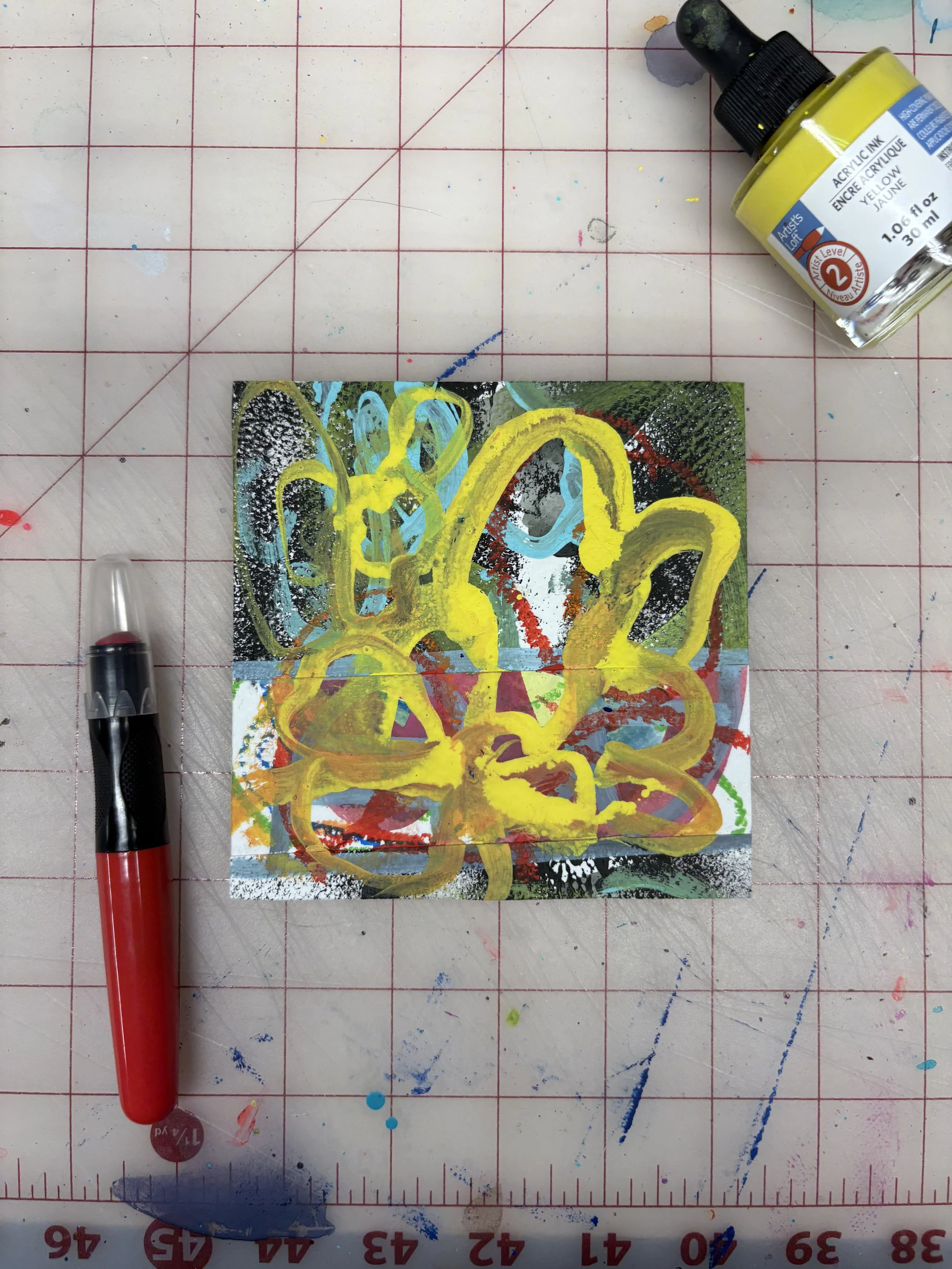
The “one square inch” test
Time to zoom in on a detail (and..why??)
Every now and then I end up standing in front of a piece that just isn’t working. Something feels off, but I can’t quite figure out what it is. I’ll step back, stare at it from across the room, take a photo, flip it to grayscale, squint at it like that will somehow unlock the mystery…all the usual tricks. And when none of that helps, I go smaller.
I use what I call the “one square inch” test. I pick a tiny area, about the size of a postage stamp, and only look at what’s happening there for a while. I stop worrying about the whole composition and pay attention to the line, color, texture, edges, whatever happens to be living in that little section.
It’s usually much easier to see what’s going on once I stop trying to solve the entire piece at once. Maybe that tiny section has a great bit of movement or a color relationship I really like. Maybe it’s completely dead and suddenly I can see exactly why. Either way, I have something specific to respond to instead of just standing there thinking, “ugh, this sucks.”
If I find a spot that feels really good, I’ll start looking at what makes it work and see if I can bring some of that into the rest of the piece. If it feels flat, I can mess with that one area first and figure out whether I got too careful, stopped pushing the material, or fell back on something comfortable.
I do the same thing with digital work, usually by zooming wayyyyy in. Once I’m looking at edges, little transitions, awkward overlaps, or tiny shifts in color, I can usually see the actual decisions much more clearly. The giant vague problem turns back into a bunch of smaller things I can actually do something about.
The other reason I like this is because it keeps me from overcorrecting. When a piece feels wrong, my first instinct can be to start changing EVERYTHING, which is a great way to destroy the parts that were actually working just fine. Looking at one little section reminds me that most of the time, the whole piece isn’t the problem. There are usually a few specific spots making everything else feel weird.
And really, every piece is just a pile of tiny decisions anyway. Marks, edges, color changes, texture, where one shape stops and another starts. We tend to think about “the composition” as this giant thing, but all those tiny relationships are what make the larger thing work.
So when I’m stuck now, I usually stop trying to fix the entire damn thing and find one square inch I can actually understand. It’s a lot less intimidating, and more often than not, that little section tells me where to go next.